The Delta between a raw image and a published global headline is now measured in seconds.
During the recent World Cup, Reuters achieved a benchmark of 6 to 10 seconds to move content from the camera shutter, across an editor’s desk, and onto the global wire. Achieving this at the scale of 16 stadiums across three countries required more than just fast hardware; it demanded a total orchestration of logistics, proprietary engineering, and a "resilience-first" infrastructure.
Precision Logistics at Scale
Covering a tournament of this magnitude is an exercise in massive volume. To maintain our standard of journalism, the technology operation supported:
- 1.35 Million Photos: Total images ingested for editorial consideration.
- 85,000 Published Assets: Curated, high-value images delivered to customers.
- 104 Rigging Cycles: The manual installation and de-rigging of remote, pin, and net cameras throughout the tournament.
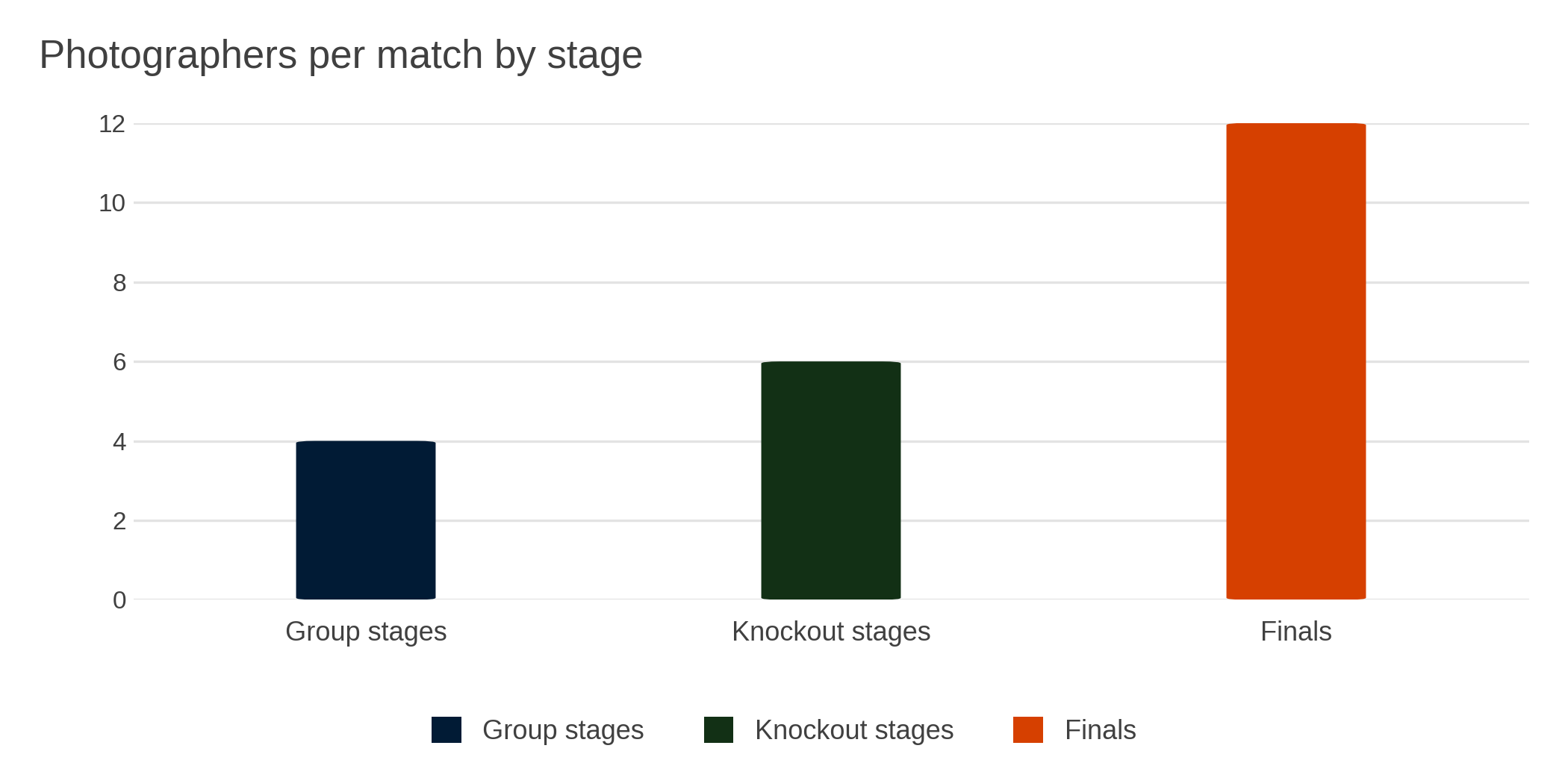
- Personnel Vector: A deployment of 50 photographers, scaling from four per match in group stages to twelve for the final.
.jpg?width=4911&height=3002&name=2026-07-06T022545Z_1248087481_UP1EM7604Y09H_RTRMADP_3_SOCCER-WORLDCUP-MEX-ENG%20(1).jpg)
The Competitive Edge: Proprietary Hardware
To capture angles inaccessible to competitors, Reuters deployed custom-engineered solutions that bypass traditional physical limitations.
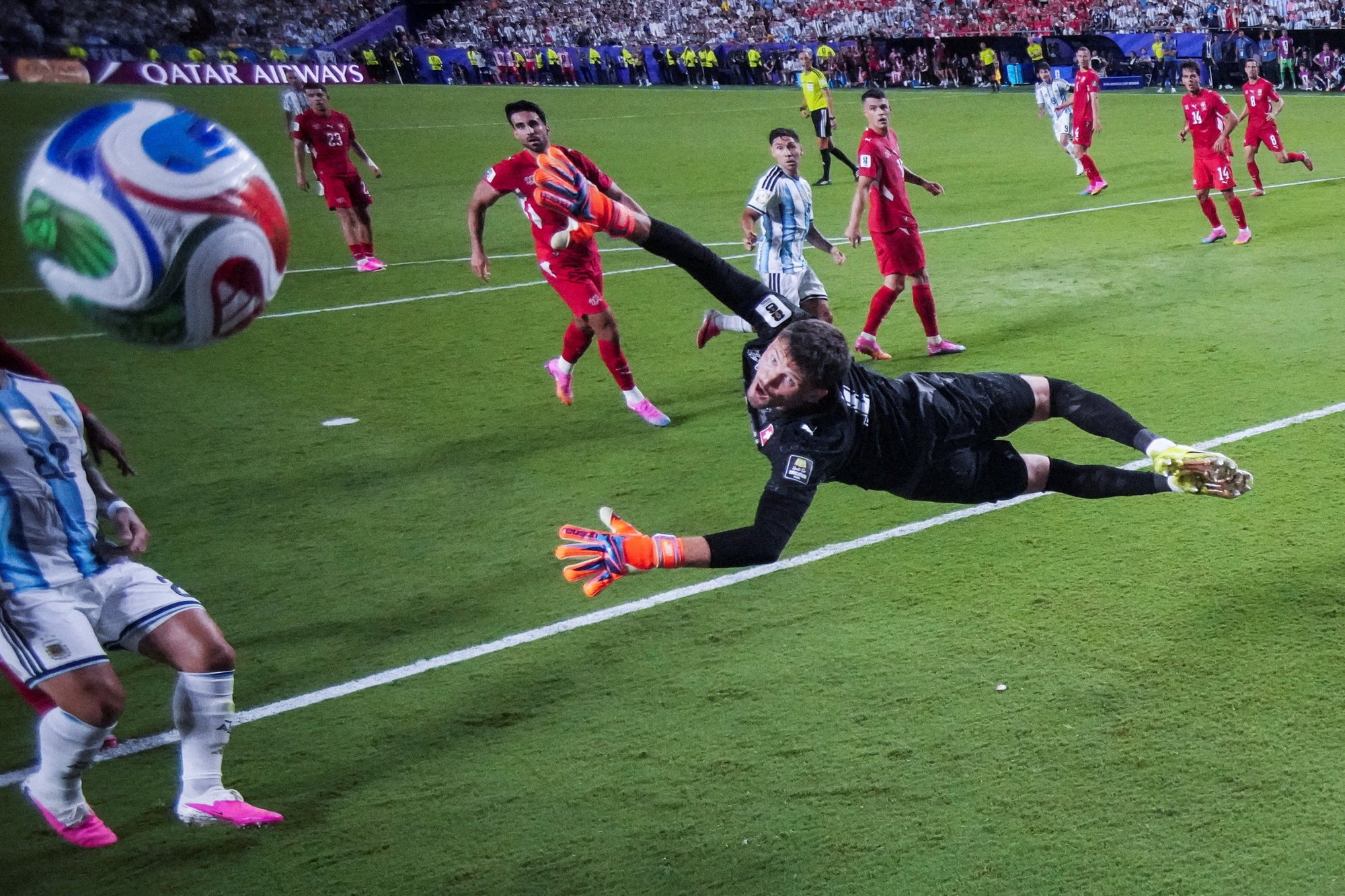
- The LED Camera: Through exclusive negotiation with FIFA, Reuters remains the only agency to install cameras behind the goal LED boards. This provides a perspective of the goalkeeper and goal-line action where human photographers are prohibited.
- TCP-Based Foot Pedal: Our team developed a custom communication tool—reminiscent of a guitar pedal—that allows a single photographer to trigger 12 unique remote cameras simultaneously. This ensures synchronized coverage of a single moment from every conceivable vector.
Resilience Through Hybrid Infrastructure
While the industry trend leans toward "all-cloud," our thesis favors a 70/30 hybrid split in favor of the cloud, backed by robust on-premise failovers.
This strategy was validated during the opening match when asymmetric routing issues and protocol delays hindered standard internet paths. While competitors reliant solely on cloud workflows suffered delays, Reuters seamlessly pivoted to on-premise paths. The transition was invisible to our editors and, most importantly, our customers.
Intelligence, Not Replacement: The AI Thesis
Reuters utilizes AI not to replace the editorial eye, but to finesse the workflow.
Our proprietary AI tools assist in:
- Volume Reduction: Filtering the 1.35 million images to highlight key frames for human editors.
- Dynamic Capture: Identifying "interest shots"—rare cards, personal moments, or action crossing stadium displays—that might be missed in a traditional burst.
- Automated Metadata: Leveraging Reuters Imagen to generate live transcripts, translations, and markings, allowing rights holders and sponsors to monetize archives and live feeds instantly.
The Conclusion: Speed is the baseline; intelligence is the differentiator. By combining human editorial judgment with high-agency technology, Reuters continues to define the provenance of sports journalism.